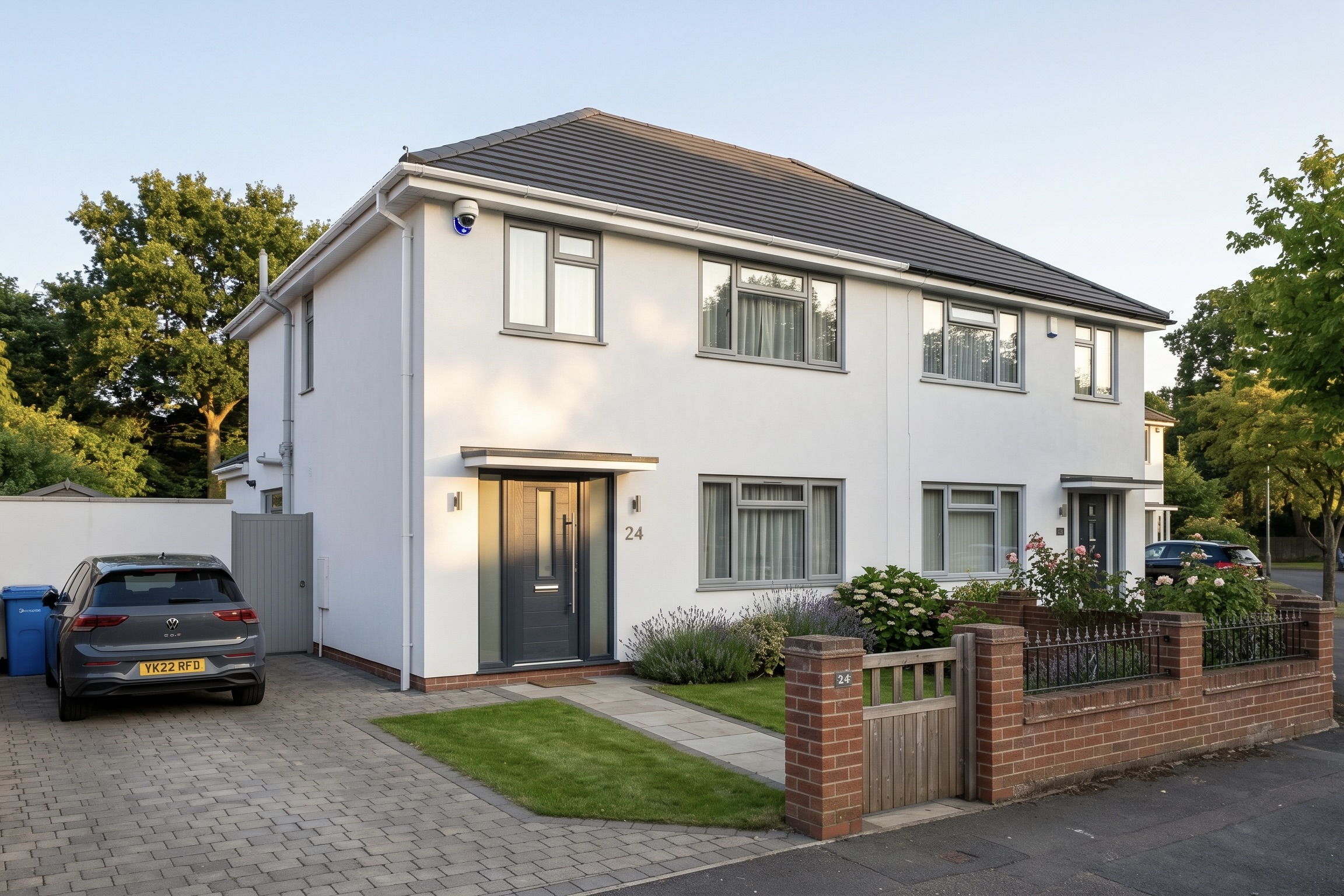
UK Burglary: The Numbers Behind the Headlines
According to the Office for National Statistics (ONS), there were an estimated 299,000 domestic burglaries in England and Wales in the year ending March 2024. While that figure has declined from its peak, it still means that roughly one in every 50 households experiences a burglary or attempted break-in each year. The picture is even more concerning in urban areas such as Greater Manchester, West Midlands, and parts of London, where rates run significantly above the national average.
What makes these statistics particularly alarming is the low detection rate. Police forces across England and Wales solve fewer than 5% of reported burglaries, meaning the vast majority of victims never see their stolen property returned or the offender brought to justice. For most homeowners, prevention is the only realistic line of defence.
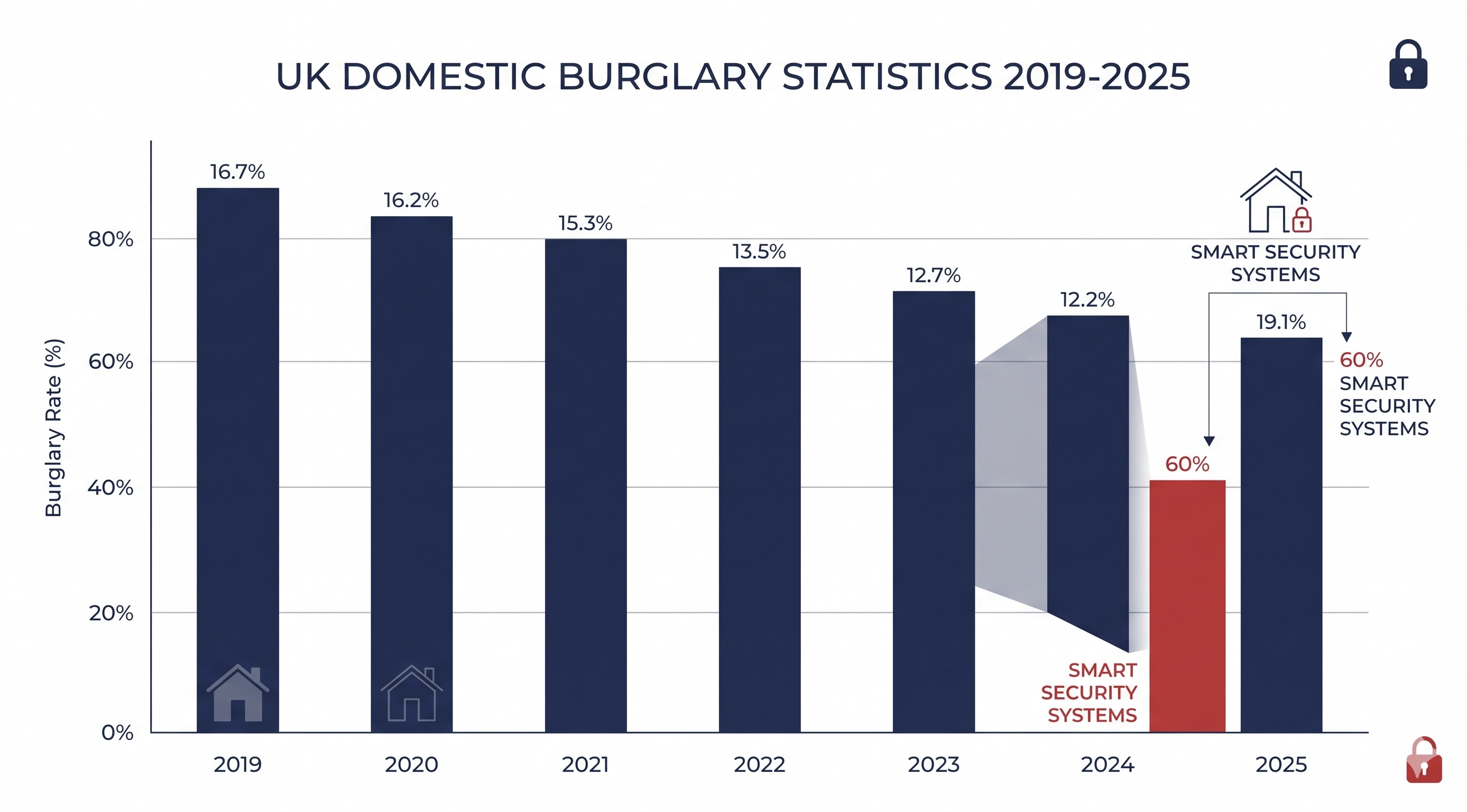
Domestic burglary remains a persistent problem across England and Wales. Source: ONS Crime Survey.
How Smart Security Systems Deter Burglars
Research consistently shows that visible security measures are one of the most effective deterrents against opportunistic burglary. A study conducted by the University of North Carolina found that approximately 60% of convicted burglars said they would choose a different target if they noticed an alarm system or security cameras. Modern smart security systems take this principle further by combining multiple layers of protection into a single, connected ecosystem.
Unlike traditional burglar alarms that simply sound a siren, today's smart systems can send instant alerts to your smartphone, stream live video footage, automatically notify a monitoring centre, and even trigger smart lighting to simulate occupancy when you're away. This interconnected approach means that every component reinforces the others, closing gaps that older standalone devices would leave exposed.
Types of Smart Security Systems
The smart home security market in the UK offers a wide range of products and configurations. At the entry level, self-monitored systems pair wireless sensors and cameras with a smartphone app, giving homeowners direct control and real-time notifications. Mid-range systems add features like professional 24/7 monitoring, where a dedicated alarm receiving centre contacts you and, if necessary, dispatches the police or a keyholder when an alert is triggered.
At the higher end, fully integrated systems combine CCTV cameras with night vision, motion-activated floodlights, smart door locks, window sensors, glass-break detectors, and video doorbells into a unified platform controlled from a single app or voice assistant. Many of these systems are designed for straightforward DIY installation, although professional fitting is recommended for hard-wired setups or larger properties.
What Does a Smart Security System Cost?
| System Type | Typical Equipment Cost | Monthly Monitoring |
|---|---|---|
| Basic Self-Monitored (DIY) | £150 – £400 | Free (app-based) |
| Mid-Range with Cameras | £400 – £900 | £10 – £20/month |
| Professional Monitored | £600 – £1,500 | £20 – £40/month |
| Full Smart Home Integration | £1,500 – £3,500+ | £25 – £50/month |
Is Smart Security Right for You?
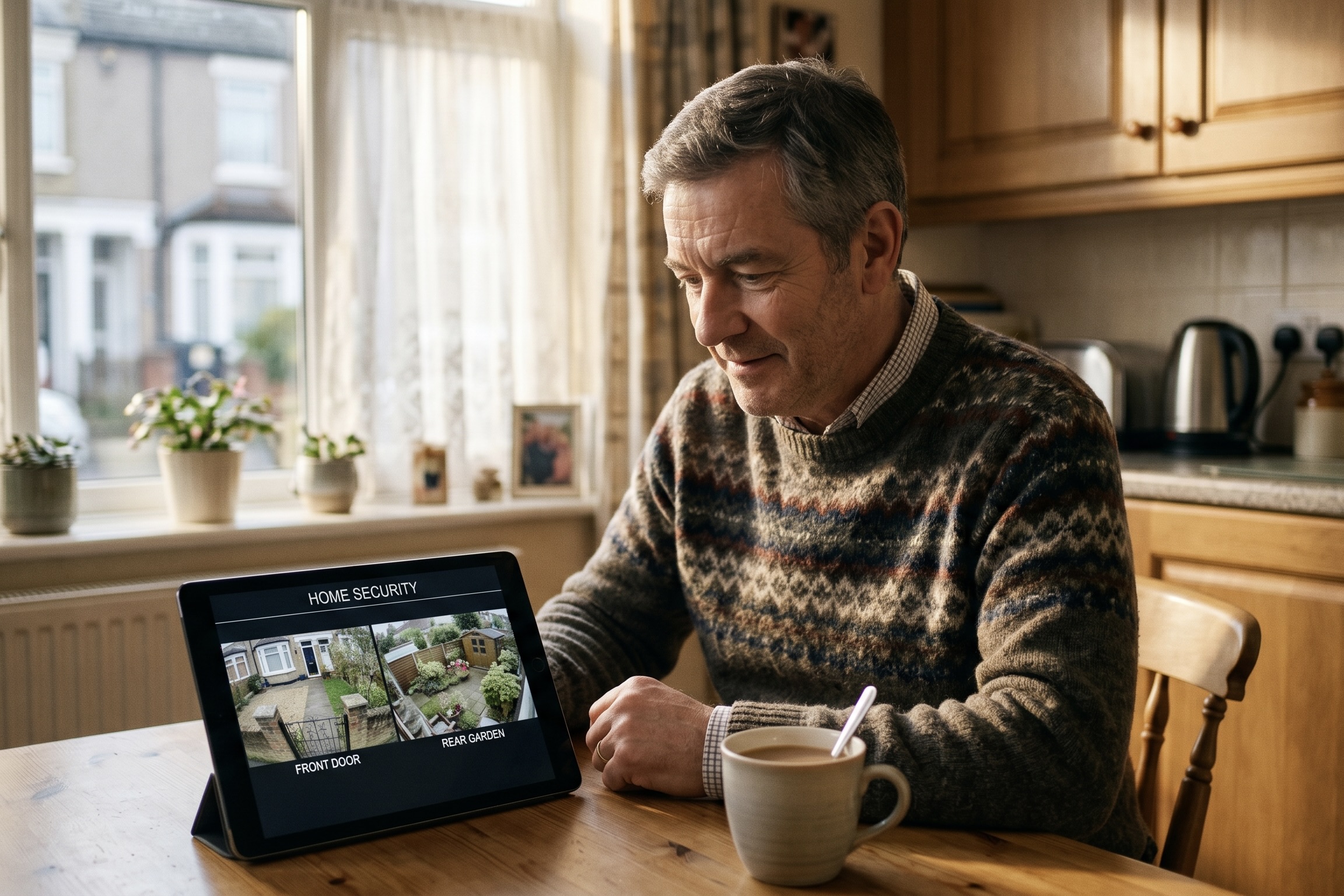
Smart home security is not a one-size-fits-all proposition. A terraced house in a suburban cul-de-sac has very different vulnerabilities compared to a detached property on a rural lane or a ground-floor flat in a city centre. The right system depends on your property layout, neighbourhood risk profile, daily routine, and budget. That is why a proper security assessment — rather than simply buying the most expensive kit — is the most important first step.
A good assessment will examine entry points, lighting conditions, existing locks and doors, Wi-Fi coverage, and whether you need indoor or outdoor cameras (or both). It will also consider whether you want professional monitoring or prefer to manage alerts yourself through an app. Our step-by-step guide explains exactly how these systems work and what to expect from the installation process.
- Visible deterrent reduces the likelihood of a break-in attempt
- Instant smartphone alerts keep you informed whether you are home or away
- Recorded CCTV footage provides evidence for police and insurers
- Smart locks eliminate the risk of lost or copied keys
- Integration with voice assistants makes daily use effortless
- Many UK insurers offer premium discounts for monitored alarm systems